

Saturday, 20th of December 2025
No time limit on a hug!
At Dunedin Airport in New Zealand, hugging has been given a time limit!
Three minutes. That’s all you’re allowed.
The rule was introduced to keep traffic flowing in the drop-off zone, with polite signs encouraging travellers to move to the car park if they’re planning something more emotional — “fonder farewells,” as the sign puts it.
I didn’t grow up with hugs. Affection wasn’t part of our family language. As a child, I remember watching other parents wrap their arms around their children at the school gates and quietly wondering what that must feel like.
In Guatemala, you can’t escape hugs.
When I first arrived in 1992, it took some getting used to. The children I met lived on the streets — dirty, unwashed, often high on glue, carrying the physical marks of neglect and the invisible weight of trauma. And yet, almost instinctively, they reached out.
So I hugged them, every time.
Science tells us that hugs calm the nervous system, releasing oxytocin and serotonin, chemicals that help us feel safe, valued, and connected. Studies have even shown that people who hug more get sick less often.
But you don’t need research to understand what a hug means to a child who has known very little safety.
I was sitting in the Radio Christmas studio the other day, tucked inside our mentoring centre in Guatemala City, when I heard the familiar sounds of children arriving. Laughter, chatter, footsteps running down the corridor. As always, each child came into the studio to say hello.
And each one hugged me.
The teenagers now make me stand up to give them a hug. They’ve grown so quickly.
Donovan, now fifteen, has been part of my life since he was very young. That day, he seemed different. Quieter, more thoughtful. He waited until he was the last one in the room.
He reached out for a hug.
After a few seconds, I began to let go, the natural social cue that the moment has passed. But Donovan tightened his arms. I waited again. Released again, and once more, he hugged harder.
Eventually, he stepped back, smiled, and walked out. No words. It must have been just what he needed in that moment.
On reflection later that evening, Donovan´s hug reminded me of an experience I had many years ago with Danilo.
Eleven-year-old Danilo came running into the mentoring centre in La Terminal one day, tears streaming down his face. He found me in the kitchen and collapsed into my arms, crying. The kind of cry that tells you something is deeply wrong.
I didn’t ask questions. I didn’t rush him. I just held him.
After a few minutes of deep sobbing, he pulled away, wiped his face, said he had to go, and disappeared as quickly as he had arrived. I never found out what had happened to him that day.
But I know the hug mattered.
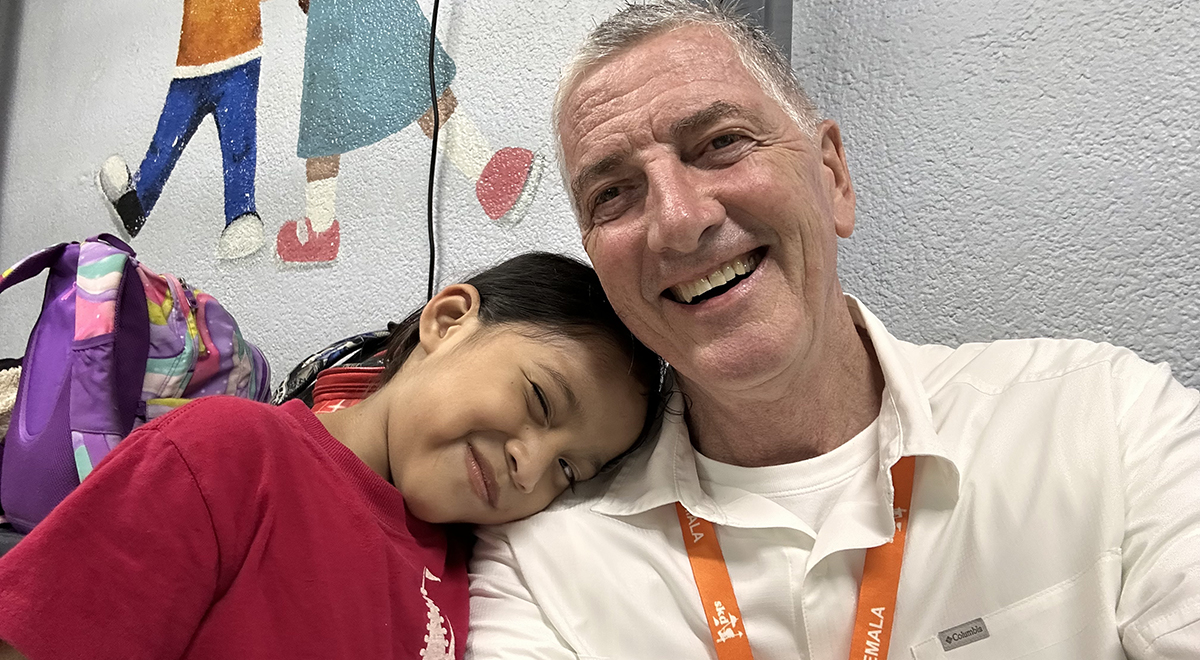
Earlier this week on Radio Christmas, I shared a moving story about Amarantha (article photo), a little girl who insists on being picked up so she can wrap her arms around your neck and snuggle in until you physically have to hand her to someone else.
One of the staff members at the mentoring centre told me recently about a new girl who had arrived with a friend already in the programme.
She didn’t play. She barely spoke.
Every time the doorbell rang, she flinched and stared at the exit.
Trauma has a way of announcing itself quietly.
After a few hours, as the other children laughed and settled into the rhythm of the centre, she began to relax, just a little.
When it was time to go home, she leaned in and whispered something to one of the team.
“Could I have one of those?” she asked, pointing to another child being hugged goodbye.
She didn’t know the word for hug. She just knew she wanted to feel whatever that was.
This is the heart of what we do.
Sometimes it looks like protection, advocacy, or education. Sometimes it looks like homework help, hot meals, or safe spaces. And sometimes, very often, it looks like arms wrapped around a child who has never known what safety feels like.
There is no three-minute limit here. Just presence. Just consistency. Just love lived out, day after day.
It is in these simplest moments that lives begin to change, and I hope that these simple actions will help create loving, caring adults who will change the course of their lives and be part of a much bigger solution to preventing more children from taking to the streets.
 Duncan Dyason is the founder and Director of Street Kids Direct and founder of TOYBOX UK, El Castillo in Guatemala and SKDGuatemala. He first started working with street children in 1992, when he moved to Guatemala City after watching the harrowing BBC documentary "They Shoot Children Don´t They?" His work has been honoured by Her Majesty the Queen, and he was awarded an MBE in the year he celebrated having worked for over 25 years to reduce the number of children on the streets from 5,000 to zero. Duncan continues to live and volunteer with the Street Kids Direct charity in Guatemala City.