

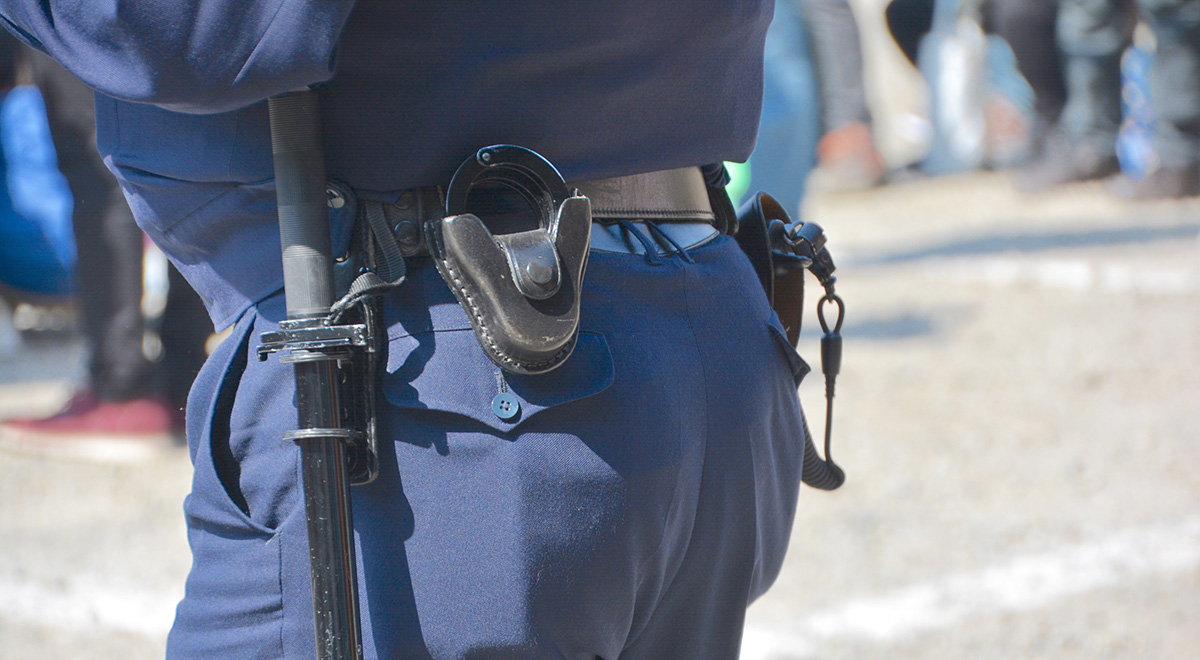
BBC World in gang territory in Guatemala: how they operate and what differentiates them from criminal organisations in other countries in the region. This is an English translation of the article.
Atahualpa Amerise, Título del autor,BBC News Mundo, X,
Barrio 18 gang member Marlon Martinez, convicted in 2011 of the murder of a teacher, is one of the escapees from Guatemala's Fraijanes II maximum security prison.
In Guatemala City's Zone 18, the presence of a stranger never goes unnoticed. And even less so if he takes photos and videos with his cell phone.
A burly man in his 25s, in a tank top, cap, and tattoos, cuts me off with his tuk-tuk, a three-wheeled passenger vehicle.
-Who are you and what are you doing here?
-I'm a journalist, I'm visiting the neighbourhood for a project, I'm leaving.
The number XVIII tattooed on his arm betrays his membership in Barrio 18, the largest gang in Guatemala that controls this area, home to more than 200,000 people —almost a quarter of the capital's population.
The control of the gangs – Barrio 18 and its rival, the Mara Salvatrucha or MS-13 – is not limited to this specific area or to Guatemala City.
Its tentacles extend across the geography of Central America's most populous country, shaping the lives of approximately 18.5 million Guatemalans to varying degrees.
While in neighbouring El Salvador, the government of President Nayib Bukele dismantled the gangs with a controversial strategy of mass arrests and a state of emergency in force for more than three years, in Guatemala, these criminal organisations have not stopped gaining power, and the homicide rate has not stopped rising.
Their cells or cliques have become more sophisticated, their extortion networks are broader, and they carry out calculated operations, such as the escape of 20 Barrio 18 prisoners considered "highly dangerous" from the Fraijanes II maximum security prison, southeast of the capital, this October.
With most of the fugitives still missing, the case has sparked a political crisis, forcing the resignation of Interior Minister Francisco Jiménez, while several officials are accused of complicity.
In response, Congress approved an anti-gang law at the proposal of the government that declares gangs "terrorist organisations" and raises the maximum sentence from 12 to 18 years for their most widespread crime: extortion.
It also contemplates the construction of a maximum security prison exclusively for gang members, which inevitably reminds us of El Salvador's controversial Terrorism Confinement Centre (Cecot).
"It is one of the most heartfelt demands of Guatemalan families to build a safer country," President Bernardo Arévalo said of the new legislation.
At the height of gang crime in the Central American country, we delve into some of its most conflictive neighbourhoods to explore how these criminal groups operate.
In Zone 18
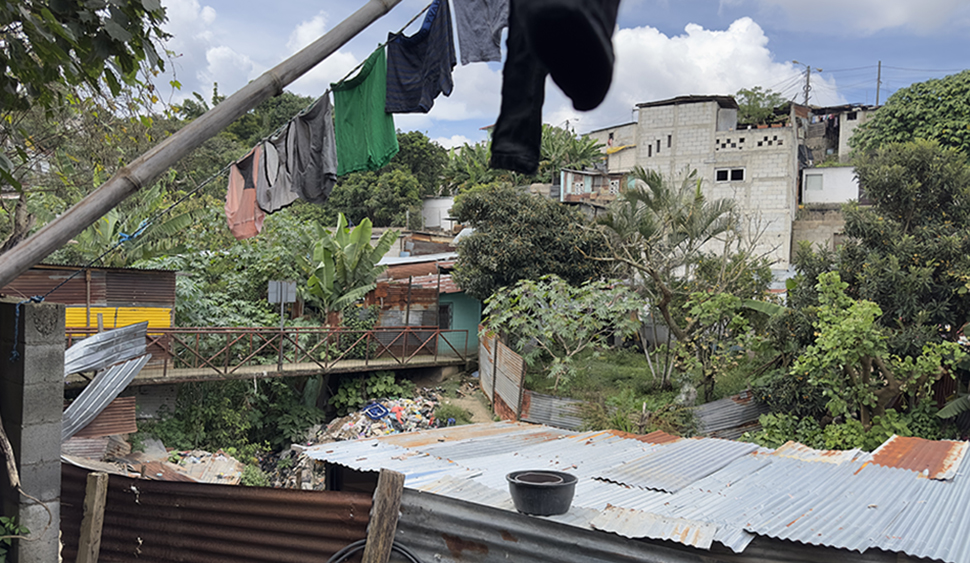
In the hills on the northern outskirts of the capital, Zone 18 unfolds a labyrinth of narrow streets on steep slopes, where brick or adobe buildings coexist with improvised houses made of sheet metal and board.
During the day, the neighbourhood bustles with a constant hustle and bustle of people and vehicles between shops of all kinds, improvised markets and food stalls. Neighbours watch strangers curiously, but avoid eye contact and shy away from conversation. Some graffiti on the walls with the number 18 reminds us who is in charge here.
We enter the Association for the Development of Nueva Zona, an NGO dedicated to reintegrating young gang members into society.
Its leader is Pastor Edwin Cordón, who for years was the leader of one of the cliques of the Barrio 18 and, after exchanging the gun for religion, today tries to convince teenagers that there is another way out.
Cordón knows well how the gang works from the inside. "You feel an absurd power: you think you control life and death; one call is enough to order someone to be eliminated," he says.
He recalls how his order was enough to decide the fate of a young recruit accused of making a grave mistake, such as treason.
"If at any time they tell you that you are a snitch, that you pass information to the police or to enemies, they will eliminate you," he says.
And, he adds, "if they send you to commit a murder and you don't obey, they give you a warning beating, although it can also cost you your life."
Dying for the neighbourhood
Pastor Erwin Cordón now and in the time he belonged to Barrio 18 in the 2000s (first from right).
The former gang member explains that, for members of Barrio 18, the line between life and death is becoming thinner and thinner.
"Today they can send you to kill because you kept money," something that, he says, years ago was solved with a lesser punishment.
He also knows the cost of being a gang member firsthand. "My younger brother was killed at the age of 16 by an opposing group; my best friend was also killed; and many colleagues," he recalls.
Without a specific ideology, the gang's supreme value is loyalty to the group: "They always tell you that: 'the neighbourhood says', 'I die for the neighbourhood', 'for my neighbourhood'".
The characteristic tattoos and symbols on the hands reaffirm this fidelity.
Its power is sustained by a parallel economy based on extortion, the most widespread crime in Guatemala, with more than 1,200 complaints each month, although experts estimate that the real figure is infinitely higher since only a few victims go to the authorities.
"There is almost no business that does not pay: whether it is a market or a small place, everyone has to give. That gives the gangs a huge influx of money with which they buy weapons and wills, get allies and acquire power," says the pastor.
We asked him what his biggest regret is.
Beyond a specific act, he answers: "It is the doctrine that he promoted as a leader; I involved many young people and prevented many from leaving."
"Now I try to advise them to reconsider. I know it can be changed, I lived it. My son is 25 and a systems engineer; at 22, he had already bought his first car. I, at that age, was in prison."
"They murdered my husband"
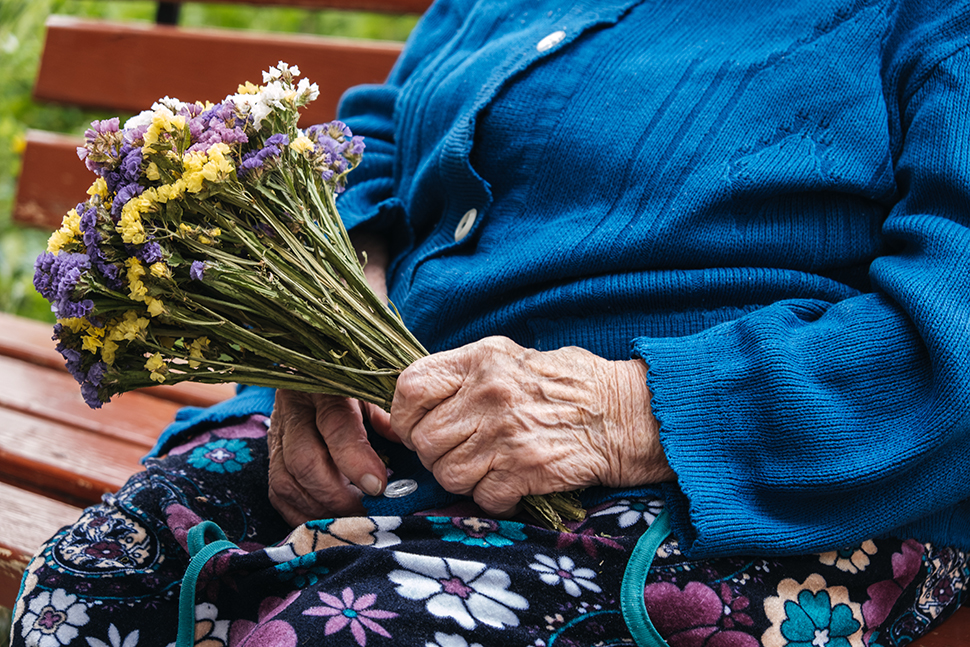
Alicia (not her real name) has been running her shop alone since gang members murdered her husband.
We now move to Zone 4 of Villa Nueva, also located on a hillside – in this case, south of the capital – although emptier and quieter than the stronghold of the Barrio 18 gang.
Here, its rival has governed since the 90s: the Mara Salvatrucha (MS-13).
Imported at that time from the Los Angeles area (California, United States), both criminal structures thrived like no other country in Salvadoran society, which had decomposed after the civil war (1980-1992), spreading from there through the Central American region.
Extortion in Zone 4 is part of daily life: markets, stores, restaurants, and even transporters must pay to continue operating.
Alicia – a fictitious name to preserve her identity – is 50 years old and runs a small grocery store in the neighbourhood, where she sells everything from chewing gum to soap or toothpaste through a barred window that overlooks the street.
It is the same place where, in 2013, the gang members killed her husband with several shots.
"He gave the fortnight and they left; The next day they returned to tell him that there was no money. He told them that he was not going to give them more. Then they threatened him, two weeks later they came back and took his life," she recalls through tears.
The merchant gives the extortionists of Mara Salvatrucha approximately a third of her meagre income.
Since then, Alicia has run the store alone, with occasional help from her children. Every fortnight, an MS-13 member comes forward to collect 500 quetzales (US$65), about a third of their income.
"We pay taxes and we pay rent. We barely have enough to eat," he laments.
We asked him if he had gone to the police to file a complaint. "No, because we can't trust them either. We cannot complain to anyone but God, who protects us, because we cannot do anything else," he answers.
To which he adds: "The gang members behave like owners of the neighbourhood."
The Economy of Extortion
Neighbourhood businesses, such as "pacas" or clothing stores, must pay the "rent" to gang members.
What is known as "rent" affects merchants of all sizes, from small shopkeepers to large transport companies, who are forced to make weekly and monthly payments, and even extraordinary payments in summer and Christmas.
In 2024 alone, some 800,000 businesses closed due to violence and extortion, and each entrepreneur loses an average of 16,635 quetzales (about US$2,170) per year to criminals, five times more than an ordinary citizen, according to the latest report by the Global Entrepreneurship Monitor (GEM).
It is not a problem exclusive to small businesses: nine out of 10 companies affiliated with the Guatemalan Chamber of Commerce admit to being victims of illegal charges, and the institution estimates annual losses of more than US$260 million due to this crime.
Even though the vast majority of extortions go unpunished, complaints about them have increased in recent years.
In 2024, more than 16,000 cases were registered, a record, and in the first eight months of 2025 alone, more than 18,000 cases had already been counted, suggesting another record at a rate of around 151 per 100,000 inhabitants, higher than that of neighbours such as Honduras or El Salvador.
Guatemalan transporters must pay the gangs "rent" to operate.
As was the case in El Salvador before the dismantling of the gangs, along with retail, the other primary sector co-opted by these groups in Guatemala is public transportation.
Gang members impose periodic quotas on businessmen and drivers; if they do not pay, they kill them, set fire to buses, or, in the best of cases, force their withdrawal, leaving entire communities without service.
Experts emphasise that the extortion economy permeates all of society, as each payment demanded is passed on to the final price of goods and services, making the daily lives of millions of Guatemalans more expensive.
This is how the gangs operate
Guatemala went from 16.1 homicides per 100,000 inhabitants in 2024 to 17.65 this year, more than double the world average, according to the Centre for National Economic Research.
We are talking about 2,154 violent deaths between January and August that, in the absence of more specific data, experts attribute largely to gang violence.
The government has identified 12,000 gang members and collaborators across the country, and another 3,000 are in prison, including some of the leaders of Barrio 18 and MS-13.
Gang members use gang hand signs to reaffirm their group identity.
Far from tackling the power of these criminal groups, prisons are the epicentre of many of their operations.
"From prison, they continue to give orders due to the respect they maintain for group integration, for their codes of silence, honour and loyalty to the group. These imprisoned leaders run a lot of operations," says Eddy Morales, a criminology professor at Guatemala's University of San Carlos.
He explains that the leaders and members of the cliques maintain constant communication "thanks to the prevailing corruption in the prison system, which allows the entry of cell phones and routers."
These means make it easier for them to continue committing crimes while serving their sentences: the Guatemalan Prosecutor's Office estimates that between 80% and 90% of extortion calls are made from prison.
Former Deputy Security Minister José Portillo acknowledged the magnitude of the problem in an interview before his resignation on October 14, in the midst of the political crisis caused by the escape of 20 imprisoned gang members.
"We have an average of 30 to 35 searches a month in prisons, with identification and confiscation of illicit objects that should never have been there: weapons, cell phones, money...," he alleged.
And he stressed that, after each seizure, the gangs show rapid resupply power: "In one or two weeks, there are internal rearrangements and they continue to operate."
Even after being captured, criminals often feel protected by the gang and are defiant.
Inside and outside prison, the cliques that form the backbone of the gangs have strict internal hierarchies that determine roles and functions.
"There is the one who carries the word, the principal, who is called ranflero; then there are the palabreros, then the soldiers, further down the banderas and, finally, the initiates or amateurs. That's how it works normally in all cliques," describes criminologist Eddy Morales.
The Mara Salvatrucha is characterised by its operational planning, while the Barrio 18 acts "in a more errant way" but has a greater number of troops, the analyst explains.
"La Salvatrucha is more selective; its group is smaller in Guatemala but more fearsome because of its tactical and strategic capacity. La 18, on the other hand, stands out more for the quantity of its members than for their quality. They act en masse," he says.
Both have maintained an absolute enmity since two decades ago, when they ended a tacit truce that had allowed their coexistence for years ("they broke the south", in gang jargon) and began to confront each other for territory and profits.
"Since then, they have been enemy number one," says Morales.
Underage "soldiers"
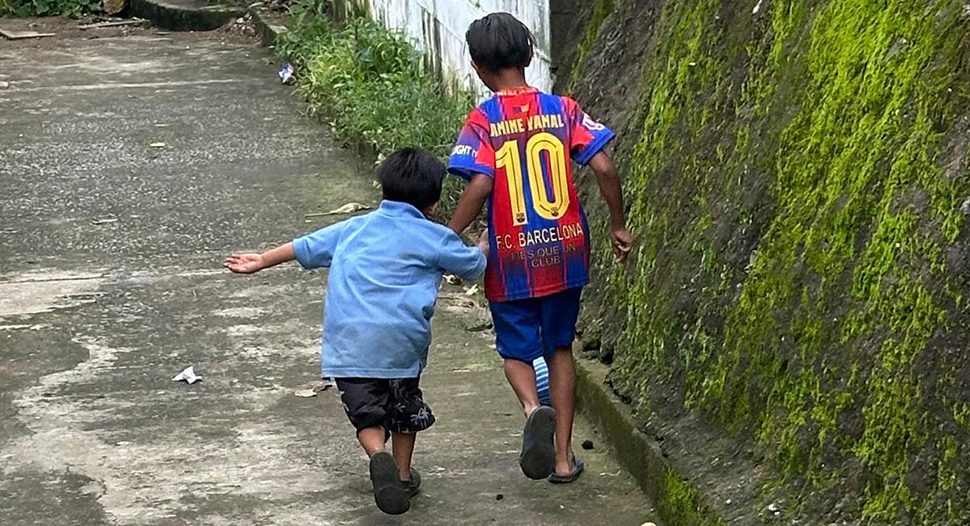
Guatemalan gangs are constantly nourished by young people and adolescents who see in the gang a space of belonging and power, or a way out of the lack of opportunities.
Recruitment, sometimes under threat, usually begins at age 13. However, there are more and more cases of minors that age being recruited, taking advantage of the fact that they are less exposed to the penal system, experts point out.
Children in marginalised neighbourhoods, such as zone 18 of Guatemala City, are at risk of being recruited by gangs at younger and younger ages.
Once selected, applicants go through a rite of passage.
"In Barrio 18, there are 18 seconds of blows inflicted by the clique. In MS-13 it is 13 seconds or, in some cases, the first mission: to execute a member of the rival gang or someone who did not want to pay extortion," says criminologist Morales.
Once the first challenge is overcome, he continues, "they are offered money, pleasures, alcohol, parties. All apparently free, although later they must pay with missions" that vary from committing a murder to giving a cell phone to a shopkeeper to extort him.
This last task, widely extended, marks the beginning of the collection of "rent" in Guatemala.
"If the merchant does not accept it or does not answer when they are called, he is marked and watched, until he is finally forced to pay or killed," explains Morales.
Within the gang structure, minors occupy the rank of "soldiers", the lowest, taking on the most risky and violent missions.
"For each errand, they give them up to 500 quetzales (US$65), which for a teenager is enough, although it risks their lives," says Morales.
In addition to ensuring the survival of the maras, experts say, the recruitment of minors perpetuates the generational renewal of the gangs and a constant growth that compensates for the casualties due to incarcerations and murders.
"It is better to pay and keep quiet"
In Zone 4 of Villa Nueva, we enter the bale – as used clothing stores are known in Guatemala – of 25-year-old Helena, who also prefers to use a fictitious name.
"Three days after opening, a boy came in, bought merchandise and told me: 'Come, look, I'm coming to leave you this phone.' They called me, I answered, and they told me that we had to pay extortion," she says.
Helena (not her real name) pays the gang members 500 quetzales (US$65) every month, plus summer and Christmas bonuses.
The threat is direct and constant: "They call and use vulgar words. If you pay, they talk calmly, but if you say that you don't have money or that you're just starting out, they mistreat you and threaten you by saying that if you don't want to pay, then don't have a business."
According to the merchant, the mechanism replicates the structure of a formal labour relationship.
"They charge admission, bonus, Christmas bonus and monthly payment. If you do the math, you also pay the Christmas bonus and the bonus 14 (extra summer pay in Guatemala) per year. That must happen no matter what, because otherwise they say they will close the business or kill you," he says.
The most shocking thing, he says, is that some of the collectors are minors whom he has seen in the neighbourhood for years.
"When my husband had a grocery store, I knew those kids. Some of them would go to church and ask me to give them something. Now I see them charging extortion."
Women gang members
A large part of the messengers who come to collect the "rent", as well as those who call the victims to extort them, are women.
Those who investigate these structures in Guatemala say that the presence of women in gangs is significant, although relegated to a subordinate role.
Pastor and former gang member Edwin Cordón explains that leaders often consider them "disposable pieces" within their criminal structure.
"For a long time, the Barrio 18 no longer gives membership to women, only to men. It is easier to kill them because there is, let's say, no bureaucracy. 'Did she keep money?, kill her'; 'Did we send her and she didn't go?, kill her'. That's why so many young girls are murdered," she says.
Statistics on violent deaths of women in Guatemala do not specify how many of the victims died at the hands of a gang with which they had a connection.
In a country with a high prevalence of gender-based violence – 49 out of every 100 women have suffered some type of violence throughout their lives (INE, 2024) – 579 violent deaths of women were recorded last year, the highest number in six years and almost a fifth of all homicides.
The gangs play an important role in tasks such as "rent" collection or extortion calls.
The recruitment of women by gangs responds to specific patterns, according to criminologist Morales.
"Many join these groups either because of threats, or because at some point they met a member and little by little they got involved," she says.
In general, they do not participate in violent actions, although they do play a relevant role in extortion: in 2024, 522 women were arrested linked to this crime, compared to 294 men.
"They also tend to carry messages or visit prisons and, on many occasions, they prostitute themselves to give pleasure to leaders who are serving sentences," Morales points out.
Maras, gangs and cartels
One of the aspects that distinguishes Guatemalan maras from criminal groups in other countries in the region is their autonomy from drug cartels, experts say.
Unlike in Mexico or Ecuador, where drug trafficking dominates much of the urban violence, in Guatemala, gangs operate on the margins of transnational organised crime.
"Drug trafficking and the gang don't get along. They are totally different phenomena," says political scientist Morales.
It adds that, although some gang members participate in drug dealing in their respective areas of control, "they are mainly consumers and small distributors subsidised by others, not directly by the main drug trafficking leaders in Guatemala."
Large Mexican organisations such as the Sinaloa Cartel operate in the Central American country, operating laboratories and cocaine transit routes.
But according to analysts, its power lies more in institutional corruption and the dominance of strategic corridors, far from the popular neighbourhoods that concentrate the activities of the maras.
Guatemala's anti-narcotics forces achieved a record seizure of 18.2 tons of cocaine in 2024, along with the dismantling of clandestine airstrips and 27 laboratories – most attributed to the Sinaloa Cartel – on the Pacific and Caribbean coasts.
Experts note, however, that the cartels barely interact with Barrio 18 or MS-13, which marks the difference with other countries in the region.
In Ecuador, for example, gangs such as Los Choneros or Los Lobos – recently designated by the US as "foreign terrorist organisations" – apply prison control and extortion methods similar to those of the maras, and in turn the authorities link them to international drug trafficking.
Guatemalan gangs have their stronghold in popular neighborhoods, while transnational drug cartels operate more in border areas.
But how does the power of MS-13 and Barrio 18 in Guatemala compare with the control these organisations had in neighbouring El Salvador before the state of emergency, when they were estimated to have 70,000 members spread across most of the territory?
In Guatemala, whose population is three times larger, unofficial estimates speak of between 20,000 and 25,000 gang members and collaborators, even though the government only identifies half.
Although Morales points out another more crucial difference: in El Salvador, the maras became a kind of political actor.
"They advanced to the point of influencing different governments to obtain conditions that favoured them, and even leaders of the Mara Salvatrucha sat down at a dialogue table with the FMLN government in the times of President Salvador Sánchez Cerén," he says.
His predecessor in office, the now deceased Mauricio Funes, was sentenced to 14 years in prison in 2023 for having negotiated with the gangs during his term (2009-2014), talks that led to a truce to pacify the country.
Journalistic investigations also point out that the government of President Bukele, before unleashing the war against the maras, would have held negotiations and agreements with MS-13 and Barrio 18.
Bukele and members of his government have repeatedly vehemently denied dealings with the country's main gangs aimed at reducing the homicide rate.
However, the U.S. Treasury Department, during the previous administration, sanctioned two of its senior officials, accusing them of having participated in such dialogues.
The experts consulted agree that MS-13 and Barrio 18 are far from having such a profile in Guatemala.
Human rights expert Mario Polanco defines them as gangs at "an intermediate level, somewhat hybrid, between common crime and organised crime."
"Although more and more the latter, because they already can reinvest their profits and even infiltrate high government spheres," he adds.
What the government does
Bernardo Arévalo's government is applying a strategy that combines police operations, prison reforms and social measures to confront the gangs.
The president, who created a specialised group to combat extortion, acknowledged that, for the moment, it is not giving the desired results because, among other factors, the versatility and adaptability of the gangs.
"I'll give you an example: the Ministry of the Interior worked with merchants in Escuintla who were victims of a network of extortionists. They identified it, dismantled it and imprisoned the leader," he explained during an interview at the National Palace in Guatemala City.
"The cases of extortion went down until another gang came and said, 'Here is a business opportunity, we are going to do it again.' And it affected that population again," he added.
Thus, while transnational cartels concentrate their power on international drug trafficking, the gangs in Guatemala continue to rely on extortion – and to a lesser extent contract killings – as their primary source of income.
After the last mass escape of gang members, Arévalo has declared the gangs terrorist organisations.
We also spoke with Arévalo about the example of El Salvador, where President Bukele's government has managed to reduce homicides and dismantle gangs drastically.
His critics, as well as national and international organisations, accuse him of doing so at the cost of turning El Salvador into one of the countries with the highest incarceration rate, with a regime that restricts constitutional rights and sends hundreds to prison after mass trials and without respect for due process.
Be that as it may, the security results have given Bukele unprecedented popularity among the public, which in turn has inspired governments and politicians in the region.
In view of this, Arévalo insisted that Guatemala and El Salvador present "different realities." However, he acknowledged that he has replicated the so-called "Bukele model" with the idea of building prisons with technological control that makes it difficult for gang members to contact the outside.
"We are isolating the leaders of these gangs in a prison where they cannot live as if it were a hotel, which was what happened in the others," Arevalo said.
The Executive has also reinforced operations against extortion with specialised groups and civilian intelligence, and on October 15, the law declaring Barrio 18 and the Mara Salvatrucha terrorists was approved, toughening the penalties for extortion and other crimes.
It remains to be seen whether these measures will contribute to reducing the growing perception of insecurity in a society permeated by criminal gang activity, which imposes a heavy burden on the country's economy and the lives of the more than 18 million Guatemalans.